World Cup on Walnut Street: 90 Minutes with C-U’s Congolese Diaspora
Boswell pays a visit to Les Gourmets Cuisine in downtown Champaign for a World Cup match more than a half century in the making.
This article was co-published with Smile Politely
Written by Boswell Hutson, Photography by Analicia Haynes
Pre-game
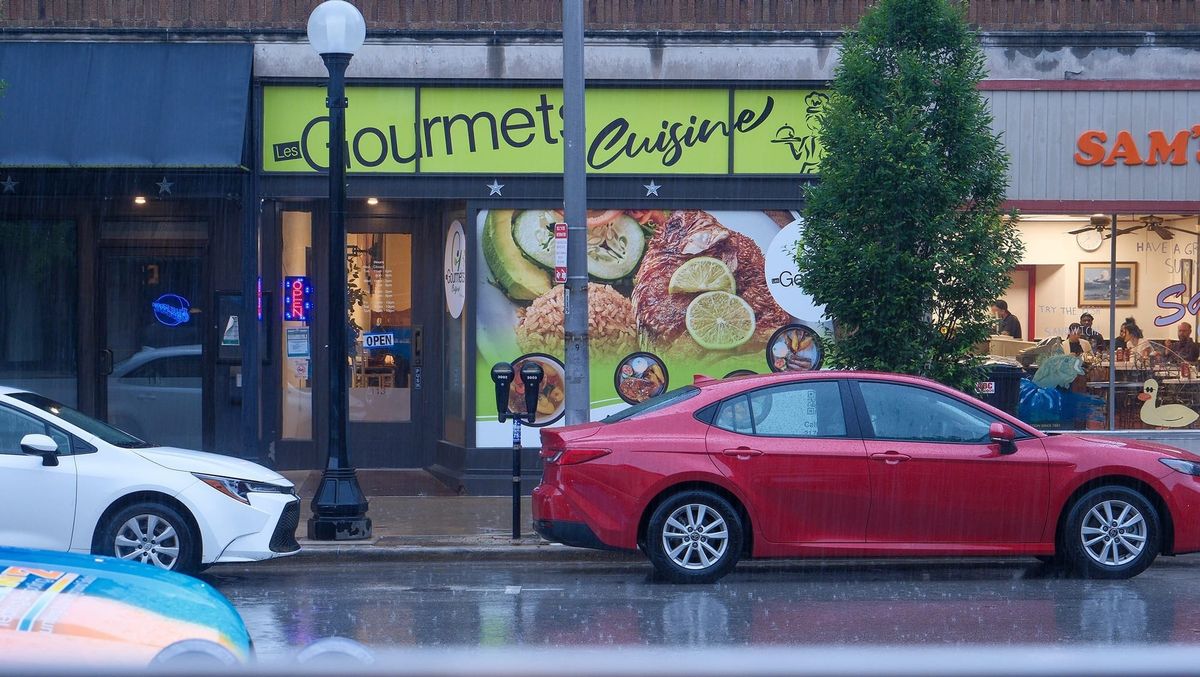
There are no signs outside Les Gourmets Cuisine that suggest the world is about to shift. There are no crowds spilling onto the sidewalk on a stormy Wednesday afternoon in Downtown Champaign. Not yet, at least.
Inside the restaurant, a small storefront on Walnut Street, the pulse is slow and deliberate. Christelle Muanza and her staff wipe down the long bar and the televisions hum quietly overhead with old World Cup highlights as they prepare the narrow, brightly-lit room. Outside, the sky is dark. A severe Midwestern thunderstorm is cracking against the pavement. It is the kind of weather, on the kind of weekday, that keeps most people tethered to their desks. But today, a couple dozen people will look at the clock, look at the sky, and decide that their jobs can wait.
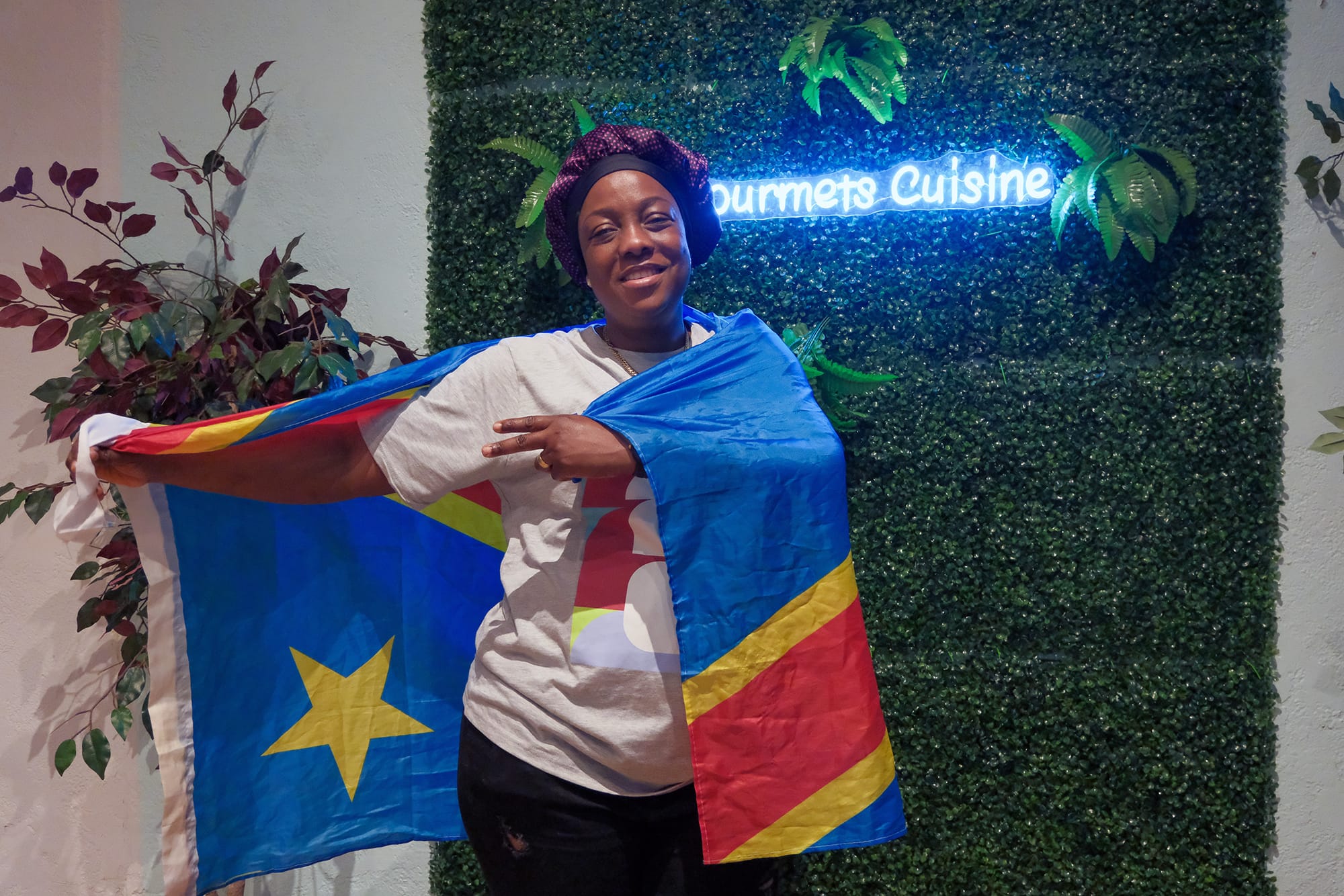
Soon, Les Gourmets Cuisine will fill with the sounds of French and Lingala, wrapped in the blue and red of a flag that has not been seen on the World Cup stage in more than half of a century. For 90 minutes, this room will cease to be a Midwestern storefront. It will become the unofficial Champaign Consulate of the Democratic Republic of the Congo (DRC).
Champaign-Urbana is a town largely defined by who leaves it; a place where university students cycle in and out every four years. But underneath that transient surface is, among other things, a relatively massive permanent population of Congolese people. More than 6,000 Congolese residents live in Champaign County, a sprawling diaspora born from the University of Illinois, the tragedy of the Congo Wars, and, more than anything, the American Dream.
For many fleeing conflicts, the draw of Central Illinois was simple survival and stability. Tracy Lumedo sits at a two-top table with her friend Jolly, a royal blue DRC scarf lays across her shoulders. Lumedo's family began arriving in Champaign in the late 1990s in part due to the second Congo War. Her brother had come to study at the university, and the rest of the family followed because they believed Champaign was a safe place.
On this Wednesday, though, refuge looks like celebration. As the first fans push through the doors of Les Gourmets Cuisine, stepping out of the Illinois storm and into the warmth of a home they cannot easily return to, the 52-year wait is almost over. Muanza greets each patron as they arrive, ushering them to sit down as she turns on the French-language stream of the game.
Kick off
When the broadcast cuts to the pitch, the low hum of conversation vanishes. The national anthem begins to play, pulling the room into a sudden silence. Sitting in a booth by himself, draped in a DRC flag is Hervain Mbuyi. For the 21-year-old Parkland College computer science student and Centennial High School graduate, the moment breaks through immediately.
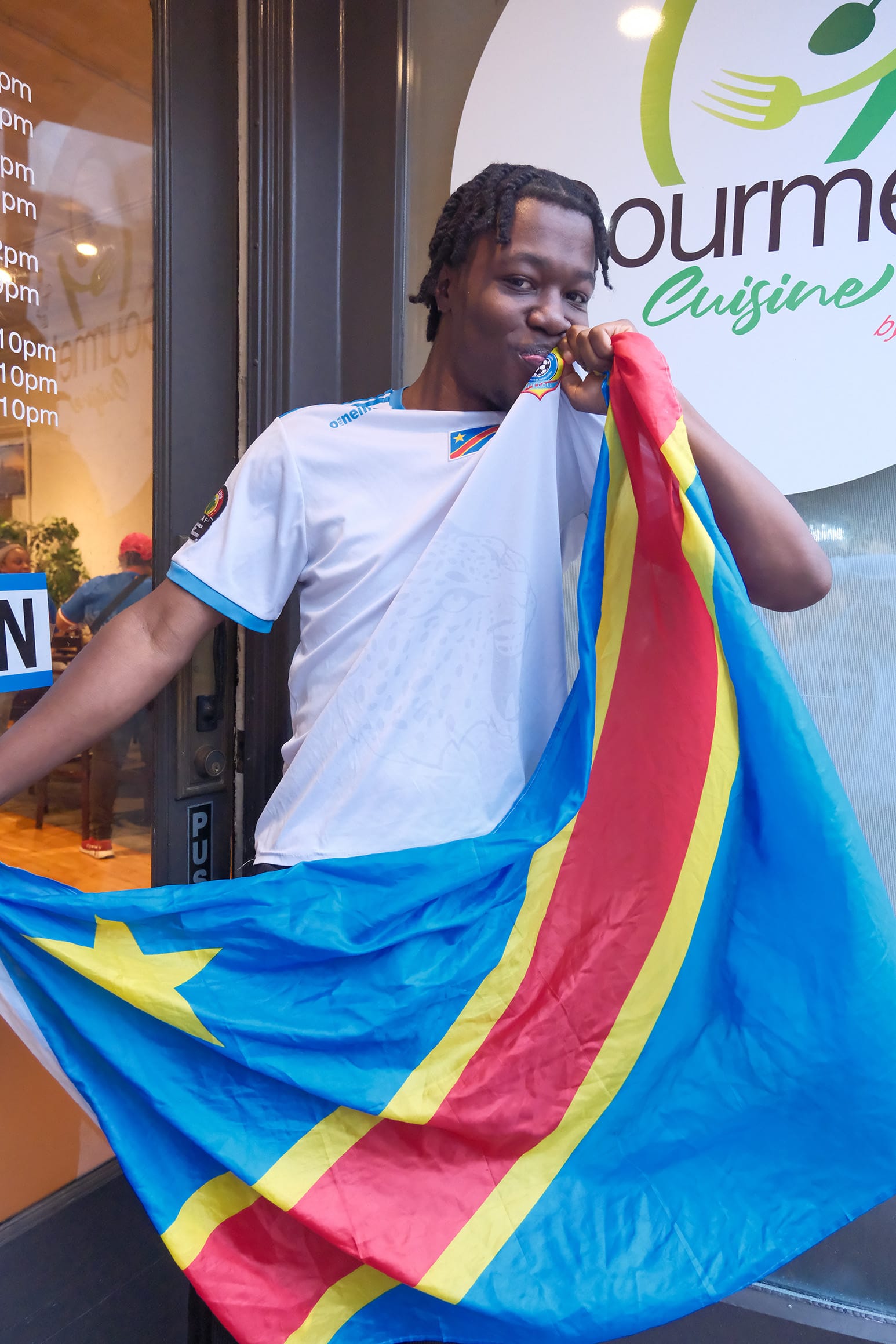 "It's a dream for us," he says, his eyes fixed on the television. "We haven't made it to the World Cup in 52 years. This means something to us".
Like many in Les Gourmets Cuisine today, Mbuyi's journey to this dining room was not a straight line. He was born in the DRC, grew up in France, and moved through the UK and South Africa before finally landing in Champaign in 2017. He has lived in more countries than most people his age have visited, but today, Walnut Street is exactly where he wants to be. "I thought it was just a dream or something," he admits. "I was crying at first, but after the game started I was just happy".
Yet, the transient nature of Champaign still applies, even to the diaspora. While Mbuyi appreciates the community here, he mentions that he likely won't stay in Central Illinois forever. Once he finishes his degree he has his sights set on moving to Houston, Dallas, or even back to France. "I don't hate Champaign," he clarifies, acknowledging the friends he has grown up with here, but those larger cities offer massive Congolese communities, the pull of extended family and potentially more opportunity for a young person.
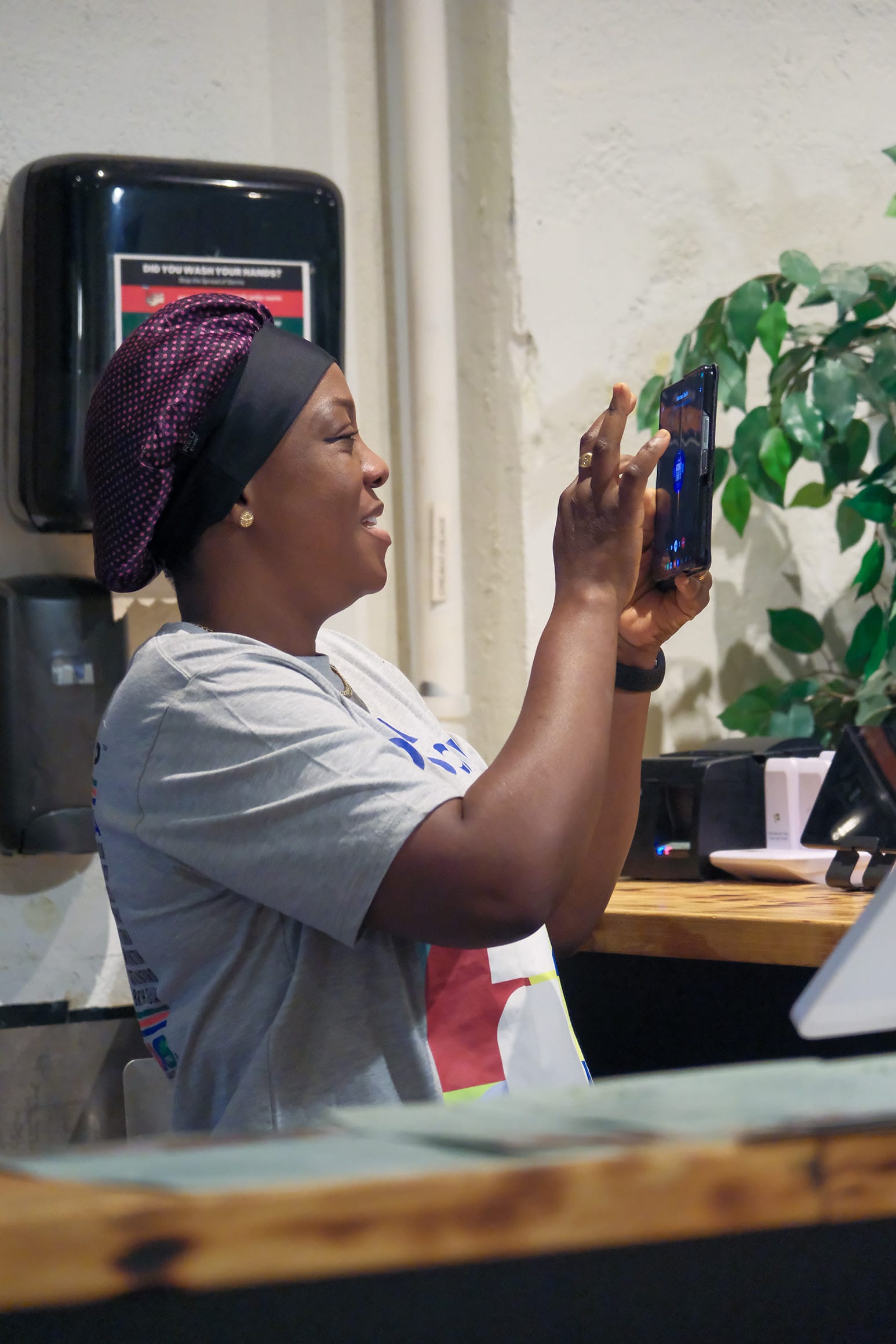
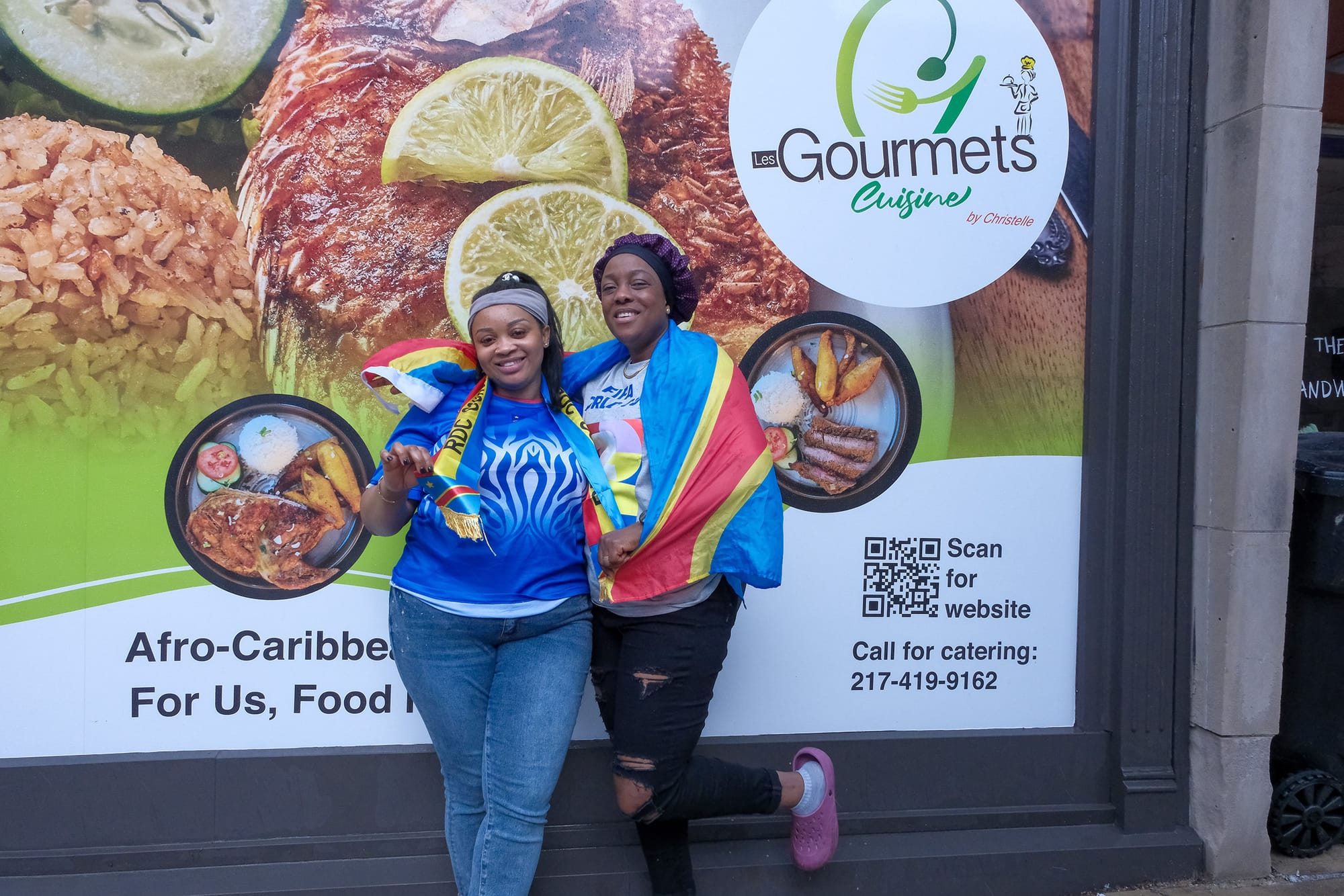
Even when Portugal takes an early 1-0 lead just six minutes into the first period, the belief in the room doesn't waver. For restaurant owner Muanza, who moved to Champaign from Kinshasa in 2011, the broadcast shrinks the thousands of miles between Central Illinois and the DRC. As she watches her patrons react, she feels the same pull. "I felt like I was home with Congolese people," she says. "People were crying, people were excited".
Halftime
The tension shatters completely when DRC finally breaks through the Portuguese defense to score just before halftime. Yoane Wissa connects on a beautiful in-swinging ball from the far side, and suddenly, the game is tied.
The dining room erupts in celebration.
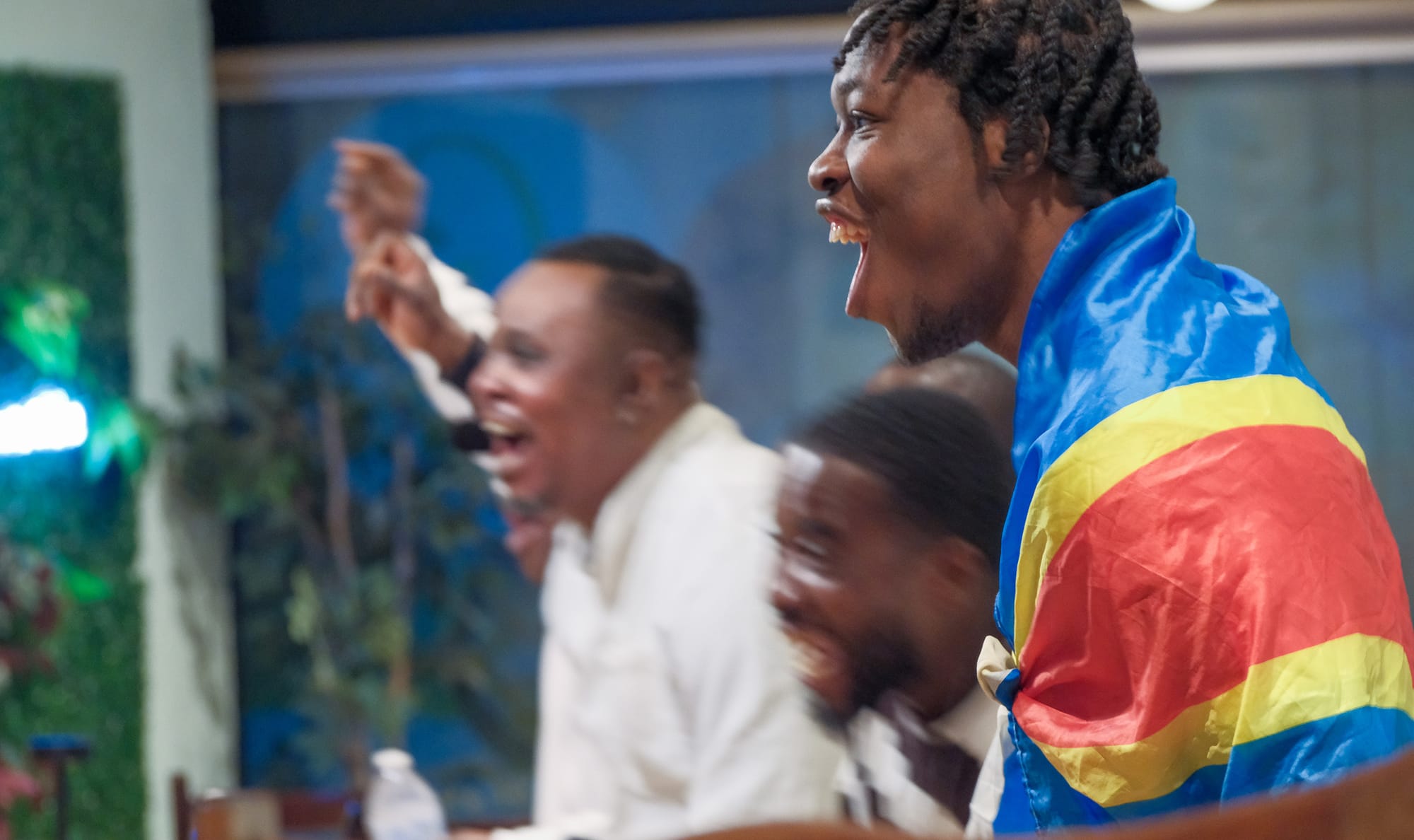
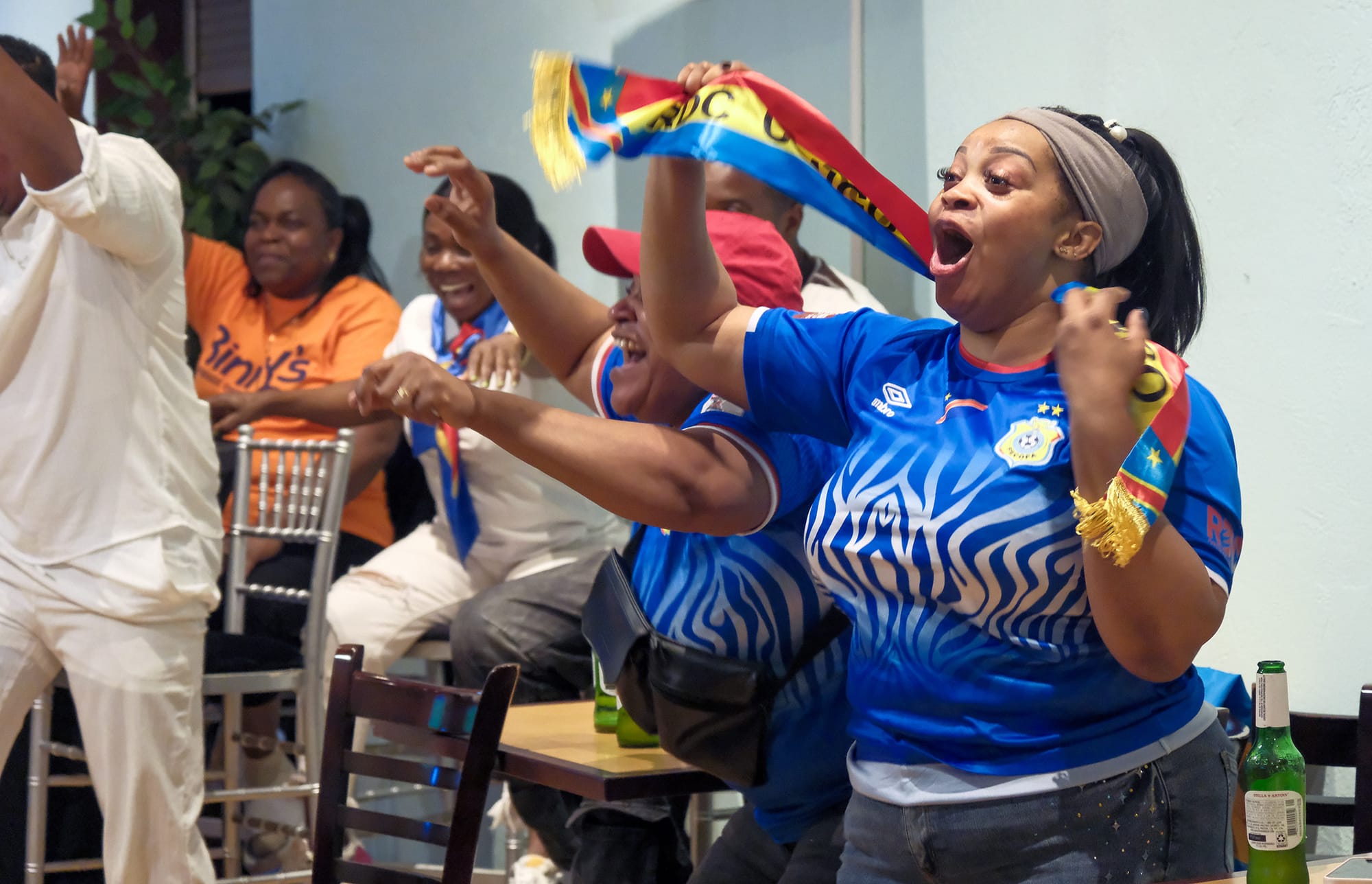
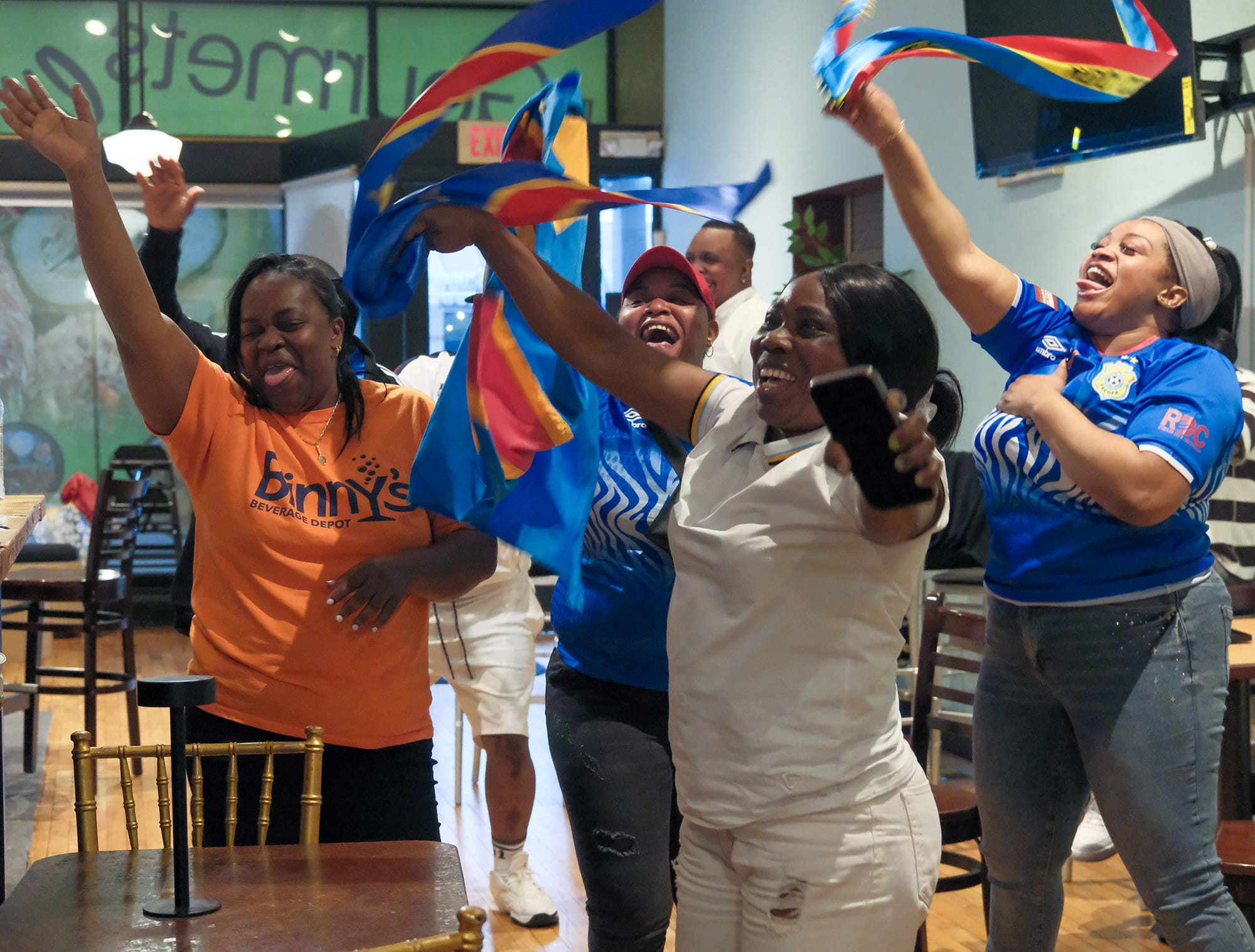
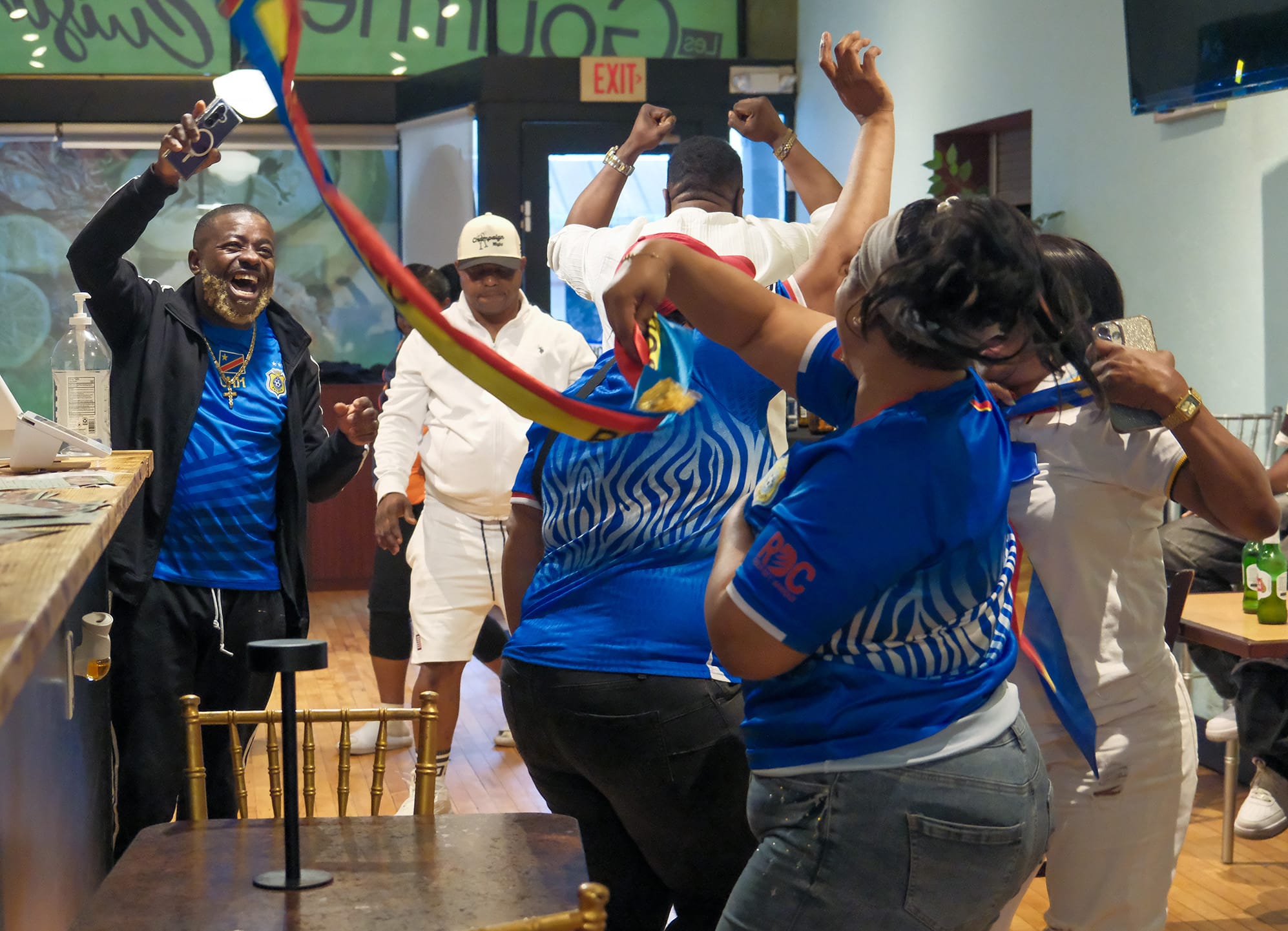
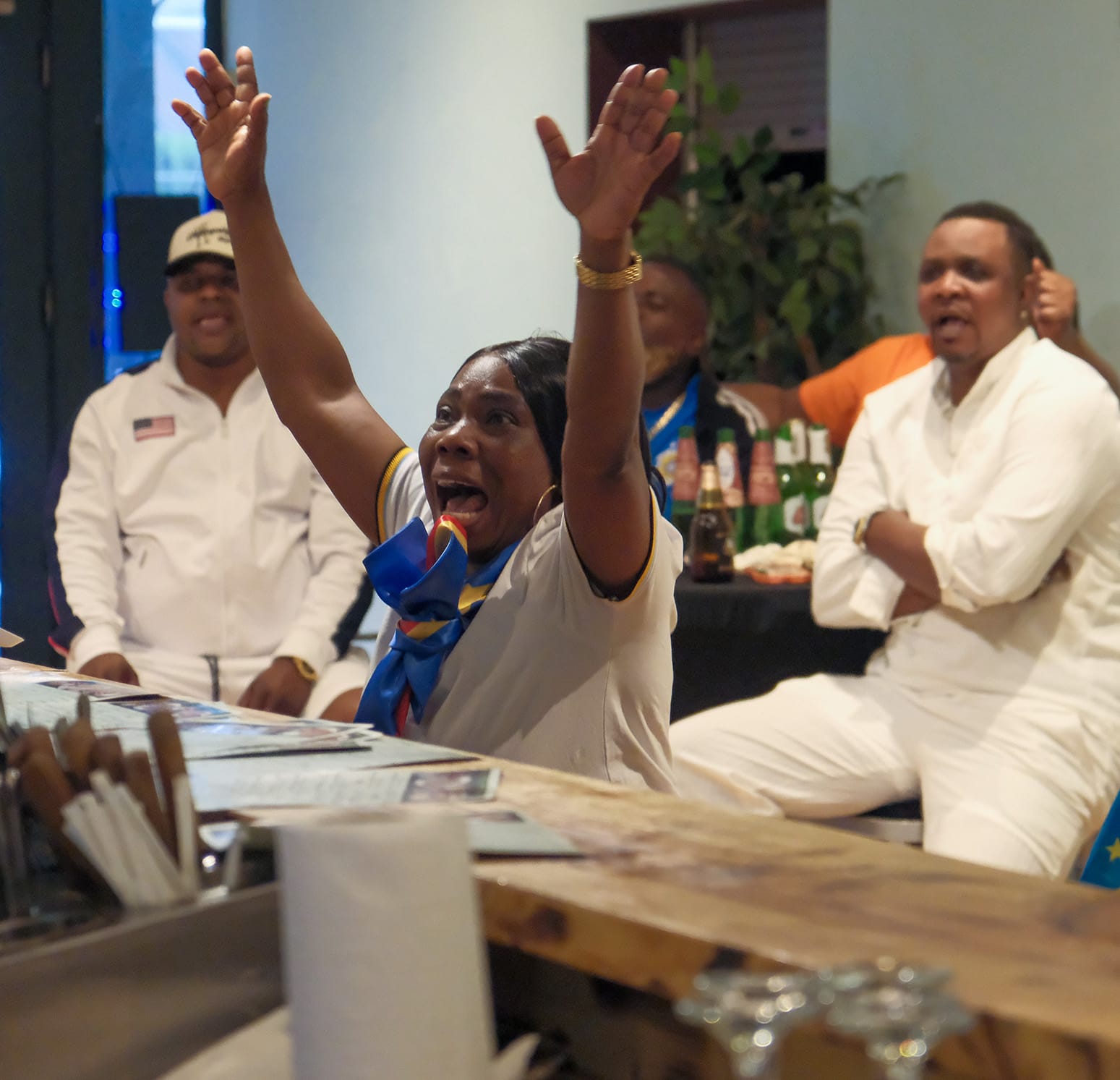
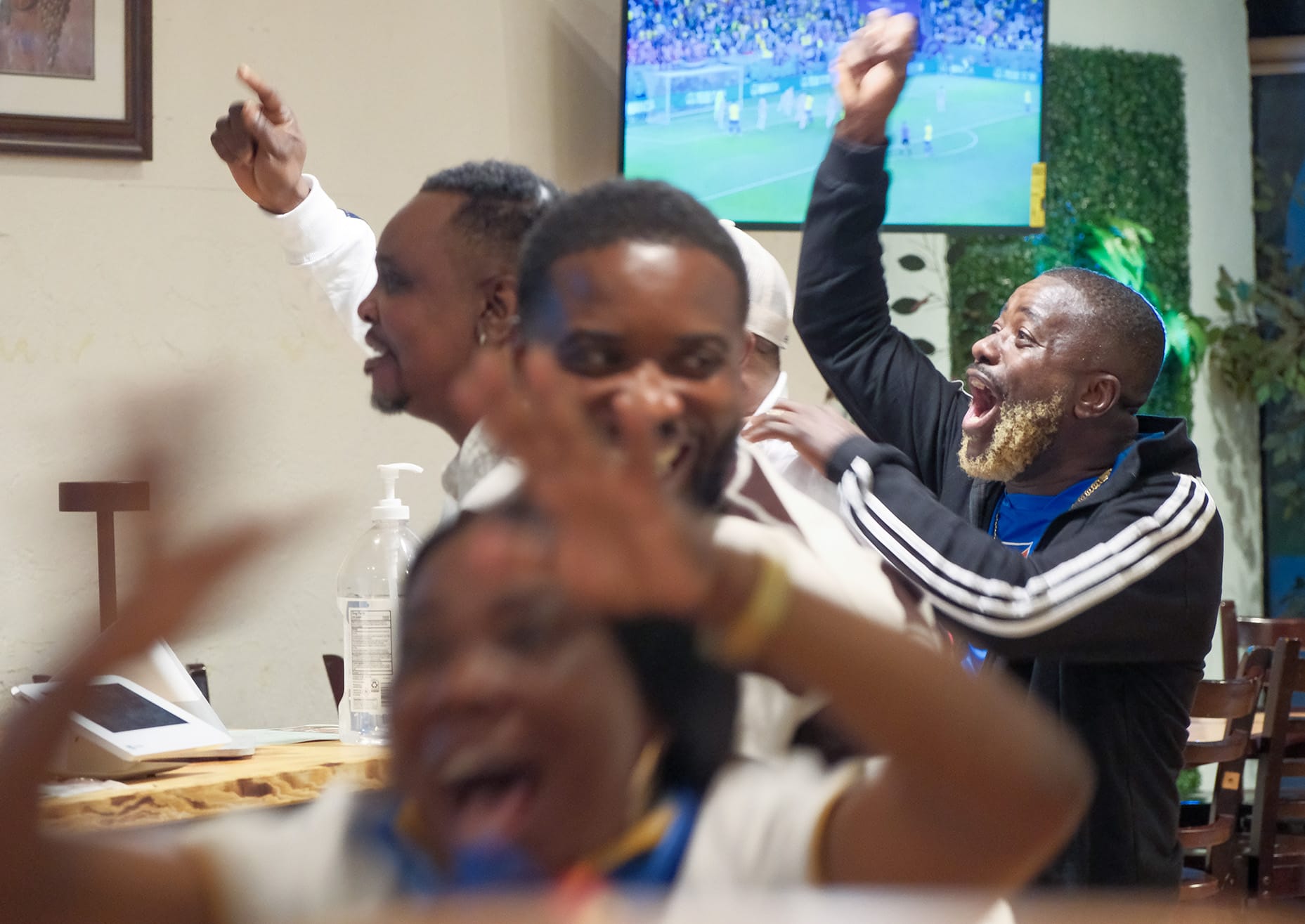
This is when the illusion of the restaurant fades, revealing its actual purpose. To Muanza's eighth-grade son Marbroy, this dining room is where the community anchors itself. "We all know each other," he says, watching the adults transform the space into a vital community center. "People don’t just come here to eat".
Over the years, Les Gourmets Cuisine has evolved into much more than a commercial kitchen. It serves as a backdrop for the community’s life cycle. Muanza often opens the side room to host weddings, graduations, and birthday parties. When the community needs to hold a meeting or mourn a loss together, at times they gather here. It is the physical manifestation of a system that has been working silently for, now, a few generations.
She notes that this communal safety net is an ingrained part of Congolese culture, even down to the dishes she serves, like shared plates piled high of pork, beef, goat, vegetables, and fufu, a Congolese bread.
"We don't eat like, you got your plate, I got my plate. We eat together," she explains. "That's the way that we're sharing our love. It's a way of teaching us how to be together. That’s how we work".
This safety net also extends beyond food, though. In Champaign, the community operates on a strict code of mutual aid, ensuring nobody falls through the cracks of their adopted city. "[We] find people who don’t have a place to stay," Muanza says. "[We] take those people and let them stay with us. You show them the way that they can find a job, make money, and then after some time, they can find space for themselves".
They did not just migrate to Champaign-Urbana; they engineered a sanctuary to ensure nobody has to survive in the Midwest alone. Les Gourmets Cuisine is at least a part of that equation, and so is something as simple as a soccer game.
Full time
As the second half grinds on, Portugal's goalkeeper Diogo Costa maintains his command of the net. When Cristiano Ronaldo appears on the screen visibly frustrated, the dining room reacts with a familiar groan. "Always got something to complain about," someone says in French.
Ironically, because the Champaign-Urbana Congolese community has persisted for so long, a new generation is growing up further from their home, and their culture, than ever. Muanza's small children, Oracle and Favor, watch the second half from the bar, fidgeting and teasing each other in their chairs. Behind them in a booth wearing a blue DRC jersey sits Marbroy, who is on the phone with his friend across town trying to find a stream for the game.
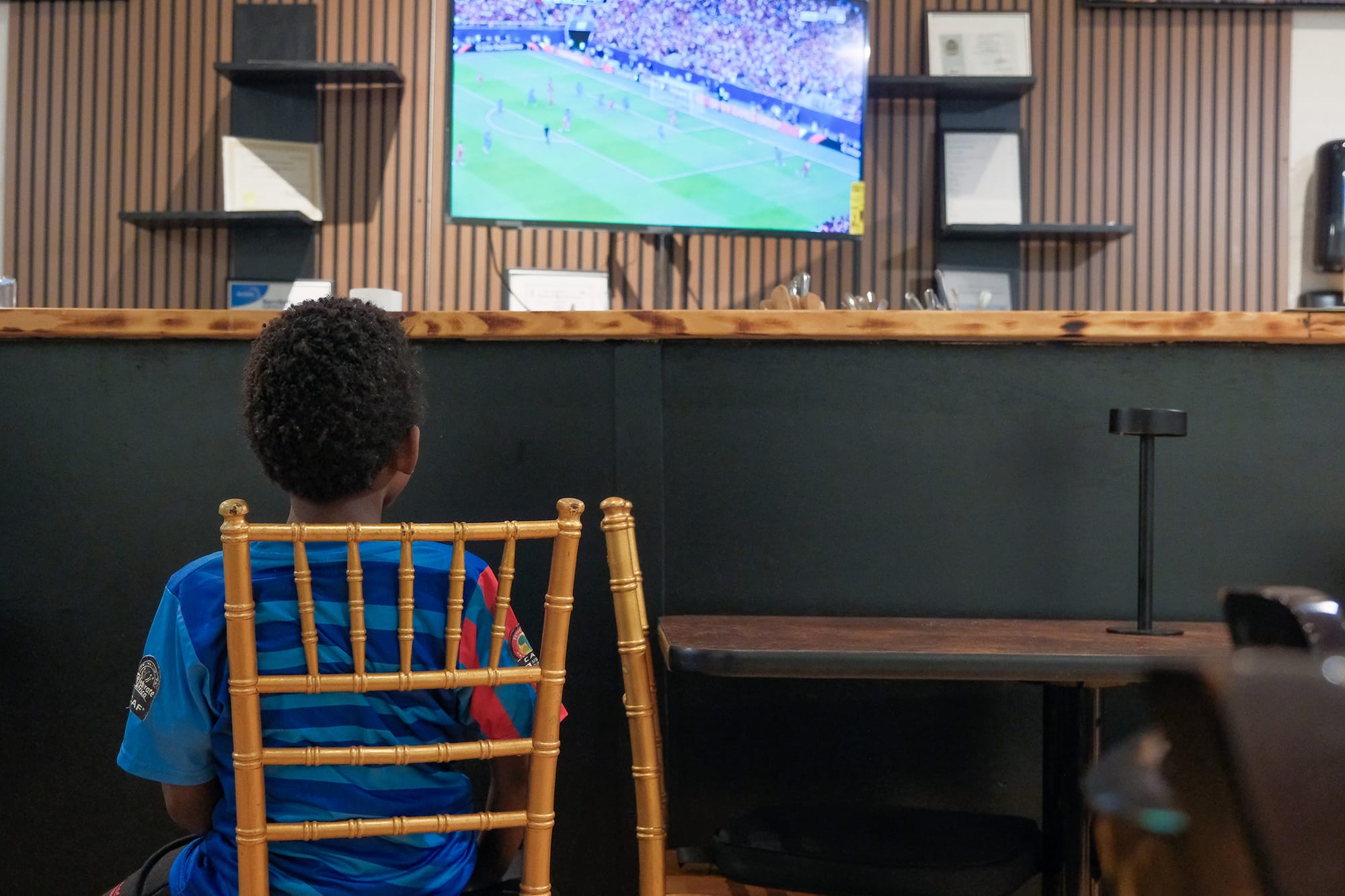
Here, the generational divide inside Les Gourmets Cuisine comes into sharp focus. On one side of the room you have people who were born in the DRC and on the other you have the next generation, born in C-U, both sharing the same culture, both rooting for the same team.
Muanza is fiercely protective of her children's Congolese heritage, insisting they speak French and Lingala at home so they maintain a linguistic connection to their relatives. Passing down that heritage, however, means actively guiding them through the more isolating, and sometimes dangerous, aspects of American culture.
For parents like Tracy Lumedo, who arrived in Champaign in 2006, the Midwestern reality waiting outside these doors is a heavy, terrifying burden. The sanctuary of Les Gourmets Cuisine and the Congolese community at large is a shield from a completely different kind of conflict.
The harsh irony of the diaspora is that surviving a war does not grant them immunity from American tragedies. The fear isn’t that Les Gourmets Cuisine itself is a target, but rather a pervasive anxiety about raising a young person during a violent American summer. So far, some in the community have begun canceling youth events, affected by gun violence in C-U.
"It's like, every week, we're losing kids," Lumedo says, her voice cracking as she speaks. Just yesterday, her own teenage son was grieving a 16-year-old friend lost to the violence. "He's a sweet kid. I picked him up from basketball practice," she says with a pause.
Because nowhere feels completely safe for a youth gathering right now, Lumedo's children are not in the restaurant today; they are tucked safely away across town at a cousin's house. "I could bring my kids in here right now, but we're scared," she says. "We don't know what's going to happen. That's the only thing that's hurting us."
When the final whistle blows, the highly respectable tie against a powerhouse Portugal feels like a victory, bringing a heavy exhale that settles over Les Gourmets Cuisine. The 90-minute portal to a home thousands of miles away is closing. The broadcast cuts to commercials, the volume drops, and Muanza begins quietly clearing plates from the long bar.
Outside the front windows, the Champaign sky has opened up. The incoming storm passes, leaving a brief reprieve. It is a quiet, physical reminder that the afternoon has shifted back to reality.
The patrons linger in the narrow dining room, soaking up the first World Cup match since the DRC was known as Zaire—a near triumph over one of the game’s best teams and greatest modern players. There is no rush for the exit. Instead, people stay seated in their booths or lean against the bar, voices carrying over the sounds of the restaurant. They are holding onto the spell for just a few minutes longer, reluctant to trade the warmth of their shared home for the damp reality of the Illinois afternoon waiting outside. Muanza flips the open sign around to closed but doesn't usher anyone out the door.
Eventually, they will have to step back out into the aftermath of the storm. They will go back to their homes, their jobs, their routines, and the heavy task of keeping their children safe in a city that doesn't always make it easy.
But the diaspora keeps moving. On Saturday, Les Gourmets Cuisine will be closed. Muanza and dozens of other local families will pack into cars and drive down to Atlanta to watch Les Leopards play in person, a potentially once-in-a-lifetime opportunity. Whether they are waiting 52 years for a soccer game, facing the realities of their adopted city, or just weathering a sudden Midwestern storm, they have already mastered the only way forward:
Together.
You can subscribe to Champaign Showers (for free!) here.
You can follow Champaign Showers on Twitter, Bluesky, Facebook and Instagram.